

Silver is usually discussed through charts, ratios, and price targets. But sometimes the most important signals show up outside the charts.
Germany just made a decision that says more about the silver market than any technical breakout.
The government is reducing the silver content in its collector coins.
That is not a small adjustment. It is a direct response to price pressure.
What actually changed
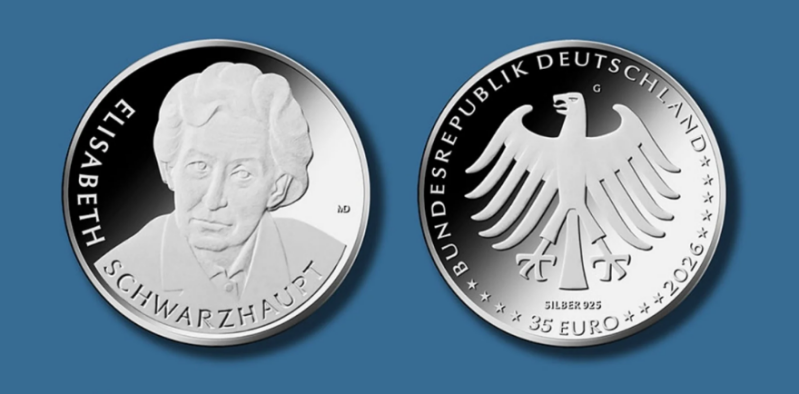
Germany issues official euro collector coins, including €20, €25, €35 and €50 denominations. These are not circulation coins, but they are still state issued and tied to precious metal content.
Due to rising and volatile silver prices, the German government decided to significantly reduce the amount of silver in certain coins. According to Reuters, the €35 coin will contain roughly 46 percent less silver going forward. The total weight of the coin is also being reduced.
The reason is simple.
At current silver prices, producing these coins at the previous specifications becomes economically unattractive and potentially loss making.
Instead of raising prices for buyers, the state chose to lower the silver content.
That is a very telling decision.
This is not about coins, it is about price pressure
At first glance, this might look like a niche policy change. But it reflects something much bigger.
When the price of a metal starts forcing governments to change product design, you are no longer dealing with a normal market environment.
This is not just silver going up.
This is silver becoming expensive enough to disrupt how it is used.
As noted by Reuters, the move is directly linked to recent price gyrations and strong demand for physical silver products. That combination creates pressure not just for investors, but also for issuers and manufacturers.
The key point is this:
Price is no longer just a number on a screen. It is changing decisions in the real world.
A subtle form of debasement
There is another layer to this.
Reducing the precious metal content of coins is not new in monetary history. It has happened repeatedly, often during periods of rising metal prices or fiscal pressure.
While these are collector coins and not circulating currency, the principle is similar.
The face value stays the same.
The metal content goes down.
In that sense, this is a modern, subtle form of debasement.
Not driven by currency crisis, but by commodity price pressure.
That alone makes it worth paying attention to.
Why this matters for silver
Silver sits in a unique position.
It is both a monetary metal and an industrial input. That dual role makes it far more sensitive to price changes than gold.
When gold rises, central banks and investors adapt.
When silver rises, industries and issuers are forced to react.
This is already visible beyond coins.
The solar industry, one of the largest drivers of silver demand, has been actively looking for ways to reduce silver usage due to rising costs. According to recent reporting by Reuters, manufacturers are experimenting with substitution and efficiency improvements to offset higher silver prices.
The German coin decision fits into that same pattern.
High prices do not just attract buyers.
They also force users to adapt, reduce, or replace.
What the chart does not show
Most silver analysis focuses on levels, breakouts, and the gold silver ratio.
Those still matter.
But they do not capture this type of signal.
A chart cannot show when a government changes the physical composition of its own coins.
It cannot show when industries start redesigning products to avoid a metal.
These are second order effects.
And they often appear before the market fully reprices the underlying reality.
Final thought
Silver did not just move on a chart.
It forced a government to act.
That is a different kind of signal.
And it is usually the kind that shows up before people fully understand what is changing.
Add comment
Comments