

Most people think technical analysis is about drawing lines.
- Trendlines
- Fibonacci levels
- Support and resistance
And they’re not wrong.
Technical analysis has always been about identifying structure in price. Connecting highs and lows. Finding areas where price might react.
But that’s only one lens.
The traditional view
In its classical form, technical analysis focuses on:
- trendlines connecting highs and lows
- horizontal levels based on previous peaks and bottoms
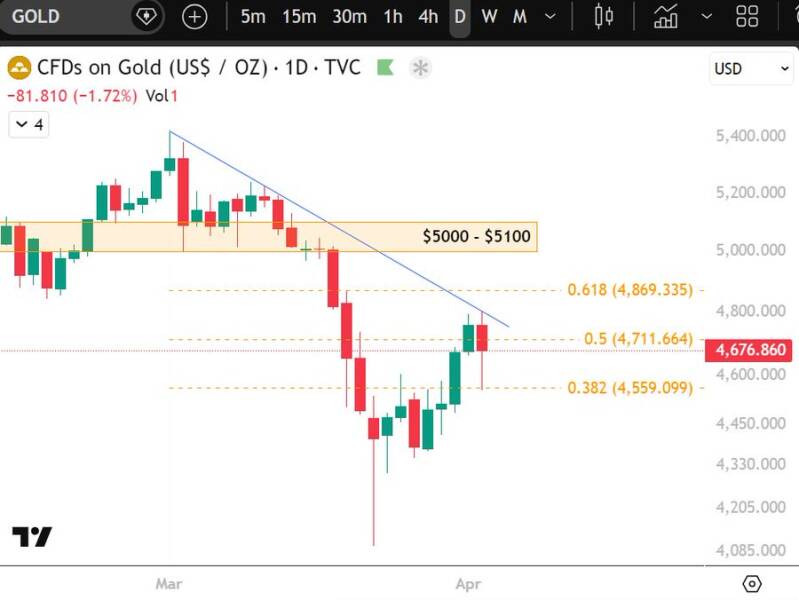
- tools like Fibonacci retracements
These are attempts to answer one question:
👉 Where might price react?
And historically, this approach is widely used.
In fact, support and resistance levels are among the most common tools in financial markets.
They are typically defined as areas where:
- demand overcomes supply (support)
- supply overcomes demand (resistance)
So far, nothing controversial.
The problem with precision
Here’s where things start to break down.
Most charts today aim for precision:
- exact levels
- perfect touches
- clean lines
But markets don’t behave like that.
Price doesn’t reverse because it hits a perfect line.
It reacts because something changes.
👉 supply and demand
👉 positioning
👉 liquidity
👉 behavior
Even research shows that price movements are not just random, but influenced by how market participants act over time, not by exact price points.
A different lens: behavior over precision
Instead of asking:
👉 Where is the exact level?
This approach asks:
👉 Where did behavior change?
That shift is subtle, but powerful.
What does that mean in practice?
Instead of drawing:
- a single line
- a precise level
You identify:
- where momentum stopped
- where buyers stepped in
- where a move accelerated or failed
These are not exact points.
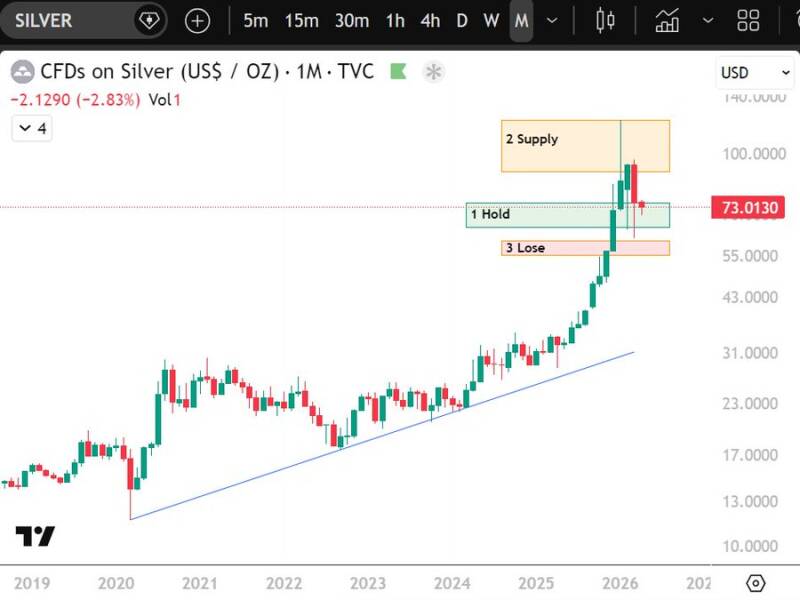
They are zones.
Why zones make more sense
Because markets are not precise.
They are fragmented, driven by multiple participants, influenced by liquidity and order flow.
Support and resistance themselves are not exact lines, but areas where buying or selling pressure becomes strong enough to interrupt price.
That aligns directly with a behavioral view.
The core difference
Traditional TA asks:
👉 “Where is the level?”
This lens asks:
👉 “Where did the market change?”
What you’re actually mapping
Not lines.
Not indicators.
But: hesitation, aggression, absorption, exhaustion
In other words:
👉 behavior
Why this matters
Because behavior repeats more reliably than levels.
Levels can shift.
Lines can break.
But:
- where traders got trapped
- where momentum died
- where demand overwhelmed supply
Those patterns show up again and again.
Final thought
You can draw perfect lines.
Or you can understand imperfect markets.
Both are technical analysis.
But they are not the same lens.
Add comment
Comments