

Gold and silver do not bottom because the news sounds bullish.
They bottom when the pressure that pushed them lower starts to fade, and when price begins to confirm that the market is no longer willing to sell every bounce.
That distinction matters.
Right now, many people are looking at war risk, fiscal problems in the United States, rising debt, and long term currency debasement, and concluding that gold and silver should already be moving higher. On a long enough horizon, that logic may still prove correct. But markets do not move on what should happen. They move on positioning, flows, and relative pressure.
That is why a market can remain structurally bullish in the long term and still fall hard in the short term.
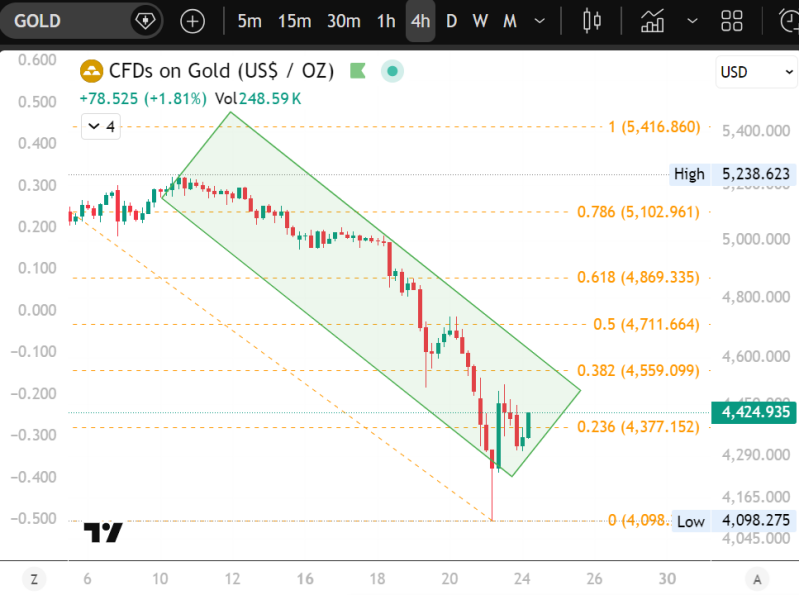
This recent move in gold is a good example. Reuters reported that spot gold fell to about $4,340 on March 24 after a ten session slide of roughly 22 percent, as the stronger dollar and fading hopes for near term rate cuts weighed on the metal. Reuters also noted that the current Middle East conflict has lifted oil prices and inflation worries, which in turn has pushed yields higher and hurt bullion.
So the better question is not, “Why did gold fail as a safe haven?”
The better question is, “What conditions need to change for gold and silver to rise again in a durable way?”
Gold and silver first trade against pressure
Gold and silver are highly sensitive to pressure coming from outside the metals market itself.
Three forces matter most in the short term.
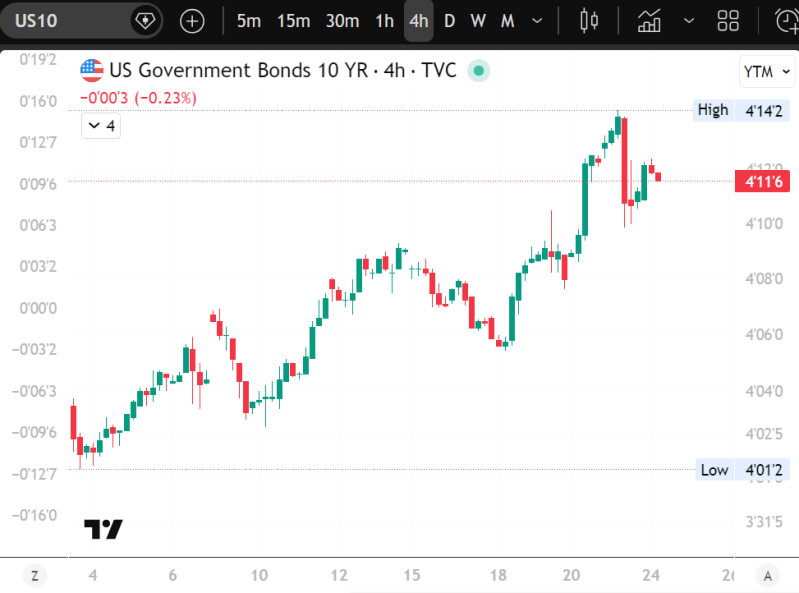
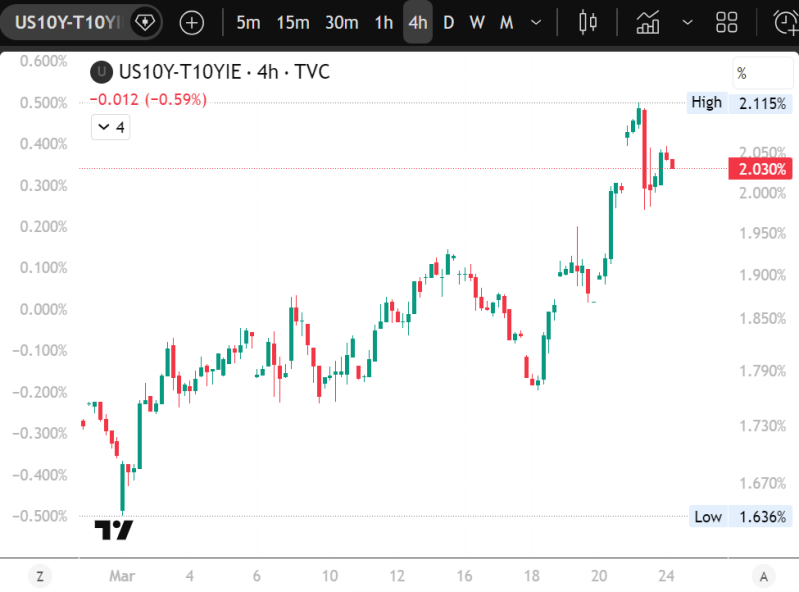
The first is real yields. Not just nominal Treasury yields, but yields relative to inflation expectations. When real yields rise, holding non yielding assets like gold becomes less attractive. When real yields stop rising, or begin to roll over, some of that pressure starts to fade.
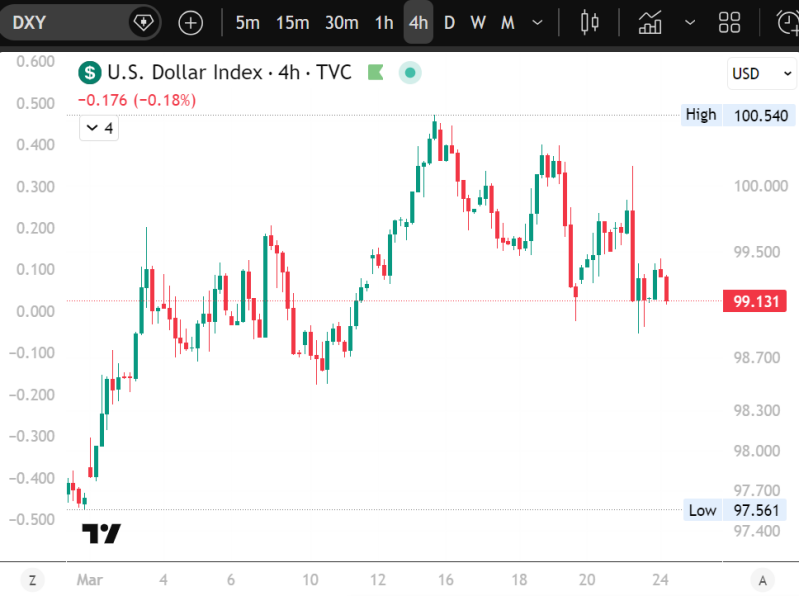
The second is the dollar. A stronger dollar tightens financial conditions and makes dollar denominated metals more expensive for foreign buyers. That does not mean the dollar causes every move in gold, but it often acts as a strong transmission channel for macro stress. Reuters explicitly pointed to dollar strength as one of the main reasons gold kept sliding during this selloff.
The third is positioning. This is where many explanations go wrong. Markets do not need a perfect bullish backdrop to turn. They only need selling pressure to become exhausted. If a trade gets crowded, even bullish news can fail to lift price because there are simply not enough marginal buyers left. Conversely, once positioning is cleaned out, even a modest improvement in macro conditions can produce a much larger move than expected. Reuters reported heavy outflows from gold backed ETFs during this drop, which is one sign that positioning has been unwound aggressively.
This is why gold and silver should be thought of not simply as stories, but as flow assets.
The story may stay bullish for years.
The flow can still turn against them for weeks.
Why war did not automatically send gold higher
This has confused a lot of people.
Traditionally, geopolitical stress is supposed to help gold. But that relationship only holds if the market treats the event as disinflationary for growth, destabilizing for confidence, or negative for real yields.
That is not what happened here.
Instead, the market treated the conflict as inflationary through energy. Reuters reported Brent crude back above $100 as the market focused on disrupted shipments and Strait of Hormuz risk. The IMF warned that a prolonged rise in energy prices could lift inflation and weaken growth. That combination matters because higher oil can delay rate cuts, keep yields elevated, and support the dollar, all of which create near term pressure on metals.
In other words, the market did not see “war equals gold up.”
It saw “war equals energy shock, inflation risk, fewer cuts, higher yields, stronger dollar.”
That is a very different chain reaction.
And in the short term, that chain reaction mattered more than the safe haven narrative.
Why “there is plenty of liquidity” is not enough
Another common mistake is to point to global liquidity and assume metals should rise automatically.
But aggregate liquidity is not the same as supportive flows into a specific asset.
Money can exist in the system without rotating into gold or silver.
That is especially important in periods when yields are high, the dollar is firm, and macro uncertainty is being expressed through cash, energy, or short duration instruments rather than through precious metals.
So when people say “liquidity is abundant,” that may be true at the system level.
It still does not tell you whether capital is rotating into metals.
For gold and silver to turn higher, what matters is not merely that liquidity exists. What matters is whether the relative attractiveness of metals improves versus the alternatives.
That usually happens when one or more of the following begins to shift.
Real yields stop grinding upward.
The dollar loses momentum.
Energy driven inflation stops forcing the market into a more hawkish policy view.
And flows begin rotating back into metals rather than away from them.
Why price still matters more than macro opinions
Macro tells you when pressure may be fading.
Price tells you whether the market agrees.
That is why technical structure matters.
A downtrend does not end because someone explains why it should. It ends when the market stops printing lower highs and lower lows, starts reclaiming important levels, and begins holding those levels on retests.
In practical terms, that means traders should stop asking only whether gold and silver are oversold, and start asking whether structure is actually improving.
An oversold market can stay oversold for longer than most people expect.
A bounce from support is not the same as a reversal.
Sitting on a Fibonacci level is not the same as reclaiming trend control.
If a market is still trading inside a falling structure, then a sharp rally may be nothing more than a relief bounce inside a broader decline.
That is why a clean reclaim of important resistance matters more than a dramatic candle off the lows.
The market has to prove that demand is no longer just reacting at support, but is strong enough to take back prior failure zones.
What would be the first real signs of a turn
The first sign is not a moonshot.
It is a change in behavior.
For gold and silver, the early clues would look something like this.
Yields stop making persistent higher highs, or begin to roll over more clearly.
The dollar stops acting as a headwind.
Price breaks the sequence of lower highs.
Key retracement levels that were acting as resistance begin to get reclaimed and then held.
Bounces stop failing immediately and start turning into consolidation above prior resistance.
That is the process.
Not one headline.
Not one candle.
Not one emotionally satisfying narrative.
A real turn usually begins quietly, with pressure fading before conviction returns.
That is why early reversals often feel underwhelming at first. The market rarely rings a bell at the bottom.
It simply becomes harder to push lower.
What could still go wrong
There is also a bearish case for metals in the near term, even if the long term thesis stays constructive.
If oil keeps feeding inflation concerns, the market may continue pricing a higher for longer policy path. Reuters reported that the Federal Reserve held rates steady on March 18 and projected elevated inflation, while Powell said the economic implications of Middle East events remain uncertain. That keeps the path of yields and the dollar highly sensitive to incoming energy and inflation data.
That is why the next inflation releases matter. The Bureau of Labor Statistics said the March 2026 CPI report is scheduled for April 10. February CPI already showed monthly energy firming again, with gasoline and natural gas both rising in February.
If inflation expectations reaccelerate, then yields may push higher again, the dollar may regain strength, and metals may struggle even if the broader long term fundamental case remains intact.
So this is not a one variable market.
Gold and silver can have a bullish destination while still taking a painful route.
The framework that matters most
If you strip away the noise, the framework is simple.
Gold and silver do not need perfect macro conditions.
They need pressure to fade.
They need flows to stop moving against them.
And they need price to confirm that the market is no longer trapped in a sequence of lower highs and lower lows.
That is the shift to watch.
Not just whether yields are high or low, but whether they are still rising.
Not just whether the dollar is strong, but whether it is still gaining ground.
Not just whether the long term story sounds bullish, but whether price is finally starting to agree.
Until that happens, sharp rallies can still be just rallies inside a damaged structure.
Once it does happen, the whole discussion changes.
Because that is the moment when potential stops being a narrative and starts becoming a trend.

Add comment
Comments