

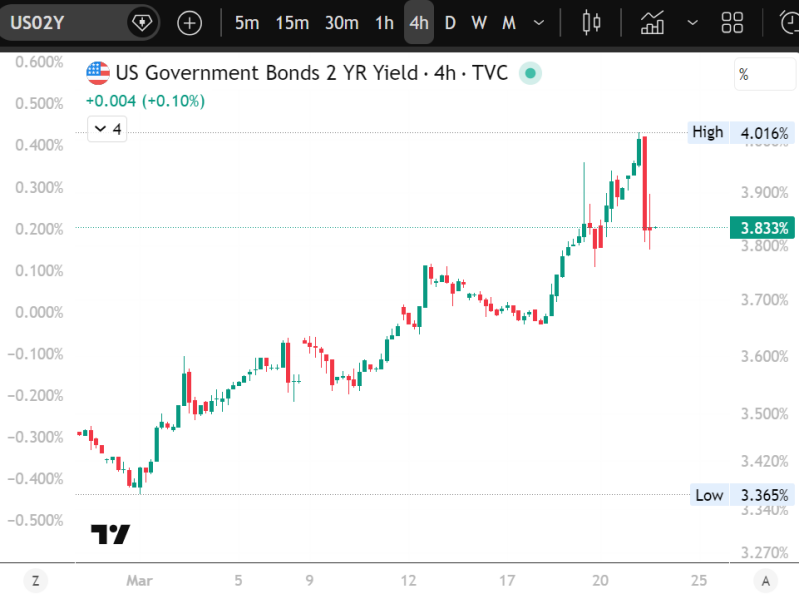
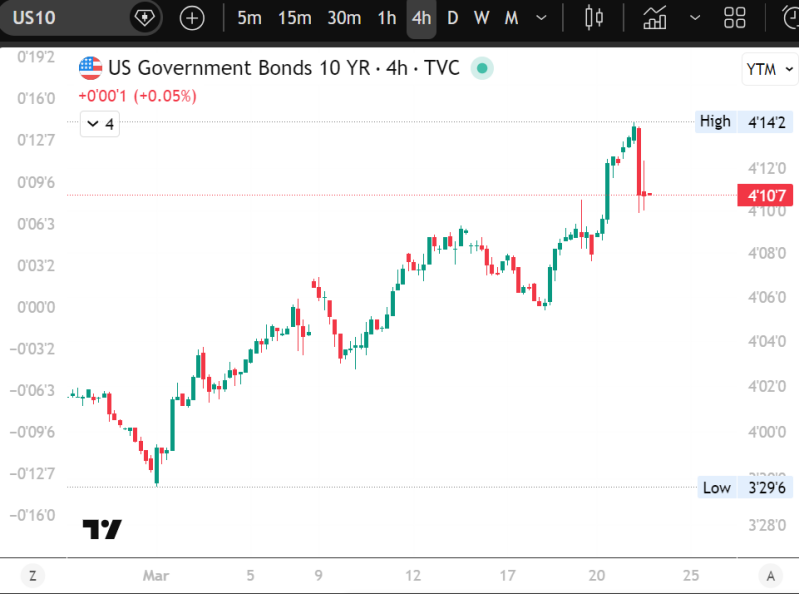
Both the 2 year and 10 year yield pushed higher and then stalled at the same time. That doesn’t happen often. Most of the time one side moves first and the other follows. But when both ends of the curve hesitate together, it usually means something is shifting beneath the surface, not visibly, not loudly, but structurally.
The short end reflects policy expectations, rate paths, central bank positioning, forward guidance. The long end reflects something else, growth expectations, inflation persistence, term premium. When both move higher, financial conditions tighten across the board. That is pressure building.
Markets can handle pressure for a while. But what matters is not when pressure is high, it is when it stops increasing. That is the part most people miss.
Gold and silver do not need yields to collapse. They do not even need them to fall. They need them to stop rising. Rising yields force repositioning, create headwinds, and drain liquidity from the system. But once that move stalls, the forced behavior starts to fade. Positioning stabilizes and slowly, quietly, it begins to shift.
Not because something bullish happened, but because the pressure stopped getting worse. That is how reversals often begin. Not with a catalyst, not with a headline, but with exhaustion.
Most people wait for confirmation. They wait for yields to clearly roll over, for the dollar to weaken, for central banks to signal a shift. By then, price has already moved.
Markets do not turn when things look good. They turn when the conditions that pushed them in one direction stop accelerating. That is the first signal.
And right now, that signal is starting to appear at both ends of the curve. Not a confirmation, but something worth paying attention to. Because when pressure stops building, everything else gets a chance to change.
Add comment
Comments