

Most people assume that markets move because of news. A headline appears, price reacts, and the explanation seems straightforward. Good news pushes price higher, bad news sends it lower.
And sometimes, that is exactly what happens.
But that view only explains the reaction. It does not explain whether the move will actually continue.
The traditional view
In its simplest form, the idea is clear. News changes expectations, and expectations move price. When something meaningful happens, the market responds, and price adjusts accordingly.
That way of looking at markets is widely accepted. It feels logical and intuitive. Something happens, and price reacts.
But there is a problem.
What this view misses
News can explain why price moves, but it rarely explains why a move holds or fails. For that, you need to look at what sits underneath the move.
Markets do not move on information alone. They move on structure and positioning.
- Structure tells you where the market has previously accepted or rejected price. It shows where buyers stepped in, where sellers took control, and where momentum changed.
- Positioning tells you how traders are already committed. It reflects whether there is still room for a move to expand, or whether most participants are already on one side.
Without these two elements, a move has no real foundation.
What actually drives continuation
A lasting move requires more than a reaction. It needs to build.
For that to happen, price has to do two things. It needs to break an important level, and it needs to hold above it. A brief move beyond resistance means little if price cannot stay there.
At the same time, positioning needs to allow for continuation. If traders are already heavily positioned, there is often little fuel left to push price further. In those cases, even strong headlines struggle to sustain momentum.
So instead of focusing only on what the news says, it becomes more useful to ask a different question. Is the market in a position to continue?
Why news driven moves often fail
Most news arrives after the market has already started to move. By the time a headline appears, structure has often been tested and positioning has already built up.
What looks like the beginning of a move is often the moment it is being challenged.
If the underlying structure supports it and positioning still has room, the move continues. If not, the reaction fades.
That is why news driven moves so often fail to hold. The reaction is real, but the foundation is missing.
A recent example
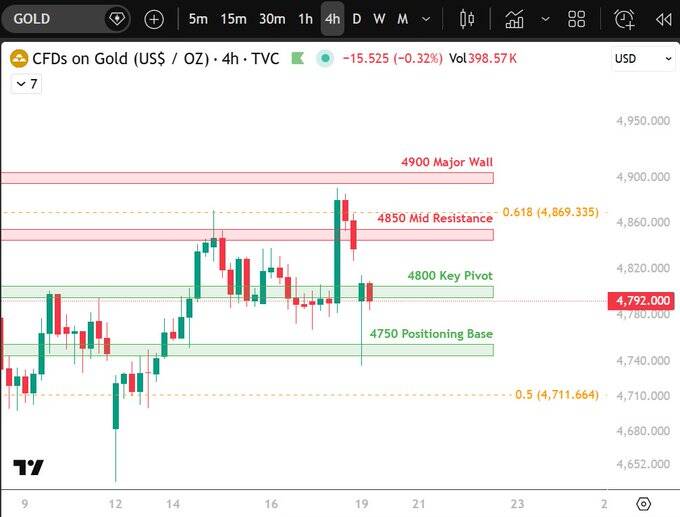
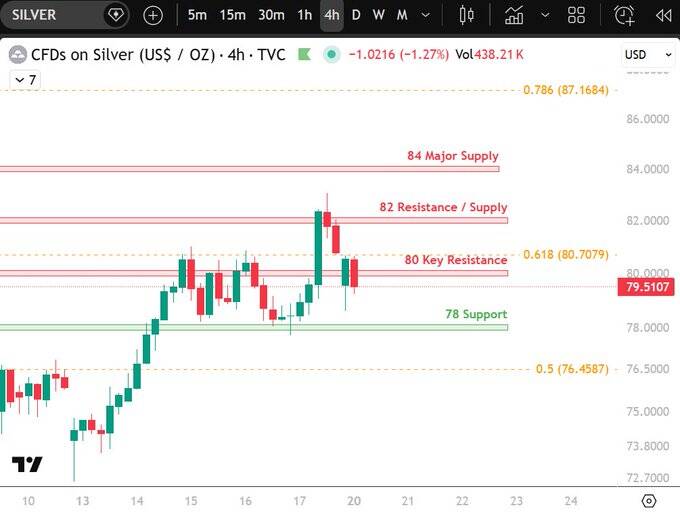
This dynamic was visible in gold and silver on Friday and this weekend.
Prices moved higher on bullish headlines, and the initial reaction made sense. However, the move lacked follow through. Price did not hold above key levels, and there was no continuation.
Even as additional developments followed, the market was unable to build on the initial strength. Instead, price drifted back.
That behavior tells you something important. The reaction was driven by the news, but the move itself was not supported by structure or positioning.
How to recognize the difference
The key is not the reaction itself, but what happens after it.
- First, look at structure. Did price break an important level, and more importantly, did it hold above it? A quick move beyond resistance that immediately reverses is often a sign of a news driven reaction rather than a sustained move.
- Second, consider positioning. If the market is already crowded, there is limited room for further expansion. Moves in those conditions tend to struggle, regardless of the headline.
- Finally, watch for follow through. Strong moves continue, build, and hold their gains. Weak moves lose momentum and start to reverse.
The core difference
The traditional view focuses on what caused the move.
This approach focuses on whether the move can continue.
That difference may seem small, but it changes how you read the market entirely.
Final thought
News can trigger a reaction, but it cannot sustain a trend. For a move to last, it needs structure that holds and positioning that allows it to expand.
Without those, even the strongest headline will only create a temporary move.
And in many cases, what looks like the beginning is simply the end of the move.
Add comment
Comments